








Key Takeaways
- 1.Inbound sales methodology converts existing demand by engaging buyers who've already shown interest instead of chasing cold prospects who haven't, improving conversion rate, rep efficiency, and pipeline quality.
- 2.The inbound sales process usually follows four stages: identify, connect, explore, and advise.
- 3.It works best when teams prioritize buyer intent, respond quickly, and tailor follow-up based on behavior and context.
- 4.For RevOps teams, strong routing, scoring, and workflow automation are what make inbound sales consistent and scalable.
Inbound sales methodology helps your team convert interested buyers from inbound marketing rather than chase cold prospects.
If your inbound isn’t converting, it’s not a traffic problem. It’s a system problem.
This guide uncovers why.
What inbound sales methodology really means
82% of B2B decision-makers engage with inbound content before ever speaking to sales. So, by the time a lead hits your CRM, they’ve already formed a view. The problem is what happens next.
Inbound sales methodology is how you turn that existing demand into pipeline by acting on real buyer intent, not generating more leads.
Instead of cold outreach, reps engage buyers who are already showing interest and move them through a structured motion:
- Qualify based on intent signals
- Run discovery grounded in what the buyer has already done
- Provide consultative guidance tied to their actual use case
Done well, this improves speed, prioritization, and conversion. Done poorly, it looks like every other pipeline problem: slow follow-up, weak qualification, and missed opportunities.
Key differences between inbound & outbound sales
Outbound creates demand; inbound converts it. They differ in how leads are sourced, qualified, and converted.
- Lead source: outbound uses cold outreach; inbound comes from buyer actions (demo requests, content, site activity)
- Timing: outbound engages early; inbound engages when buyers are already evaluating
- Qualification: outbound relies on ICP fit; inbound uses intent and behavior signals
- Sales motion: outbound is pitch-driven; inbound is consultative and context-based
- Efficiency: outbound = high volume, lower conversion; inbound = lower volume, higher conversion
Outbound vs inbound sales (operational comparison)
Understanding loop marketing and its role in inbound sales
Loop marketing improves inbound sales by continuously capturing and using buyer intent across marketing and sales. Instead of one-way handoffs, it creates a feedback loop where engagement data drives better timing, targeting, and prioritization.
Inbound sales builds on this loop, using real-time signals for faster routing, better qualification, and higher conversion.
Why inbound sales matters for B2B revenue teams
Leads come in. Some are high intent. Some aren’t. But without clear prioritization, fast routing, and consistent qualification, they all get treated the same. That’s where pipeline breaks.
Inbound sales fixes this by turning demand into a structured, executable system—one that improves conversion, speed, and predictability.
Higher conversion from existing demand
Most pipelines are filled with leads that were never likely to convert in the first place.
The issue isn’t volume; it’s prioritization.
Inbound sales focuses reps on:
- Buyers actively evaluating solutions (demo requests, pricing views, repeat visits)
- Leads with clear intent signals and urgency
Result: Higher lead-to-opportunity conversion and stronger win rates (without increasing top-of-funnel spend).
Faster speed-to-lead (and less lost pipeline)
Inbound leads are extremely time-sensitive. The longer the delay, the lower the chance of conversion.
Most teams lose pipeline here:
- Leads sit unassigned
- Routing is manual or unclear
- Follow-up happens hours later instead of minutes
Inbound methodology enforces:
- Immediate routing based on ownership and rules
- Real-time prioritization of high-intent actions
Result: Teams that respond within minutes book more meetings and crate more pipeline from the same inbound volume.
Better alignment between marketing and sales
One of the most common pipeline leaks: marketing generates leads that sales doesn’t trust or act on.
This usually comes down to inconsistent qualification.
Inbound sales aligns teams by:
- Defining shared criteria based on ICP and real intent signals
- Replacing static MQL scoring with behavioral data
Result: Higher acceptance rates, less rework, and fewer leads going unworked.
More efficient use of SDR and AE bandwidth
Outbound-heavy teams spend a large portion of time on:
- Prospecting with low response rates
- Engaging accounts that aren’t in-market
Inbound sales shifts that effort toward:
- Buyers already researching solutions
- Deals with higher probability of closing
Result: More revenue per rep, with less time spent on low-value work.
Improved pipeline visibility and forecasting
Most forecasts break because pipeline quality is inconsistent.
Inbound sales improves this by grounding pipeline in real buyer behavior.
With clear intent data, teams can:
- Identify which leads are likely to convert
- Prioritize deals based on actual engagement
- Forecast based on movement, not assumptions
Result: More reliable forecasts and better revenue planning.
Inbound works when execution is consistent. Without it, even high-intent demand doesn’t convert.
Step-by-step inbound sales process
Different levels of intent, different timing, different context…Without a consistent way to prioritize, route, and follow up your inbound leads, results become unpredictable.
Inbound sales process overview
Step #1: Identify (who to prioritize)
Most inbound pipelines fail here, treating all leads equally instead of prioritizing real buying intent. The result is predictable: high-intent leads get delayed, while low-value leads consume rep time.
Research on B2B lead scoring shows that data-driven prioritization improves conversion outcomes, as high-intent leads are significantly more likely to convert when identified early.
To fix this, revenue teams should:
- Define a clear ideal customer profile (ICP) using firmographics, deal size, and historical win data
- Segment inbound leads based on:
- Intent signals (demo requests, pricing visits, repeat sessions)
- Behavioral data (content consumed, time on site, engagement frequency)
- Replace static MQL scoring with dynamic, intent-driven prioritization that updates in real time
This ensures reps focus on leads most likely to convert (not just those who filled out a form).
Key insight: Prioritization is the highest-leverage step in inbound sales. If intent is misread or ignored, every downstream metric — response rate, conversion, deal velocity — declines.
Metrics to track:
- ICP match rate
- High-intent lead volume
- Lead-to-opportunity conversion rate
Step #2: Connect (speed + context win deals)
Inbound leads are highly time-sensitive. Delays don’t just reduce engagement, they directly reduce pipeline creation.
If a high-intent lead isn’t contacted quickly and with relevant context, the opportunity is often lost to competitors or goes cold.
To operationalize this step:
- Implement instant lead routing based on territory, ownership, or account rules
- Trigger real-time alerts for high-intent actions (e.g., demo requests, pricing visits)
- Personalize outreach using:
- Pages viewed
- Content consumed
- Source channel
This ensures every interaction is timely, relevant, and aligned with the buyer’s journey and current stage.
Metrics to track:
- Speed-to-lead (seconds/minutes)
- Response rate
- Meeting booking rate
Step #3: Explore (qualify with context, not scripts)
Discovery is where pipeline quality is determined. Poor discovery leads to misqualified deals, stalled pipelines, and lost revenue later in the cycle.
The most common mistake: running generic scripts without using available intent data.
Instead, teams should:
- Anchor discovery on what the buyer has already done (pages visited, forms submitted, engagement history)
- Ask targeted questions to uncover:
- Business pain and urgency
- Buying timeline
- Decision criteria
- Apply structured qualification frameworks (e.g., MEDDICC, CHAMP) to validate deal viability
Just as importantly, teams must maintain context across handoffs:
- SDR → AE: Preserve full lead history and qualification insights
- AE → CS: Align on expectations, use case, and success criteria
Breakdowns here create friction, rework, and an inconsistent customer experience.
Metrics to track:
- SQL conversion rate
- Meeting-to-opportunity rate
- Qualification accuracy
Step #4: Advise (convert with clarity and ROI)
At this stage, the risk isn’t lack of interest—it’s hesitation, uncertainty, or competing options.
Research shows that 87% of technology buyers now prioritize mission-critical purchases with clear ROI. That means the Advise stageis about making the decision feel low-risk and obvious. Buyers who aren't confident in the ROI case will stall, not decide.
This step focuses on:
- Recommending a solution tailored to the buyer’s specific use case and constraints
- Providing:
- ROI projections tied to their business outcomes
- Relevant use cases or customer examples
- A clear implementation path (timeline, effort, expected results)
- Addressing objections with data, proof, and transparency—not generic reassurance
The goal is to reduce decision friction and make the path forward obvious.
Key shift: You’re not selling features, you’re guiding a high-intent buyer to a justified, low-risk decision.
Metrics to track:
- Win rate
- Deal velocity
- Average deal size
If prioritization is weak, the wrong leads get attention. If routing is slow, high-intent buyers disengage. If discovery is shallow, deals stall later.
Getting each step right compounds and so does getting each one wrong.
Tools & technologies that enable inbound sales
Inbound demand is only valuable if it’s acted on quickly.
Most teams already track intent signals: page visits, demo requests, repeat engagement. The challenge is turning that data into consistent action.
Without the right systems in place, follow-up slows down, prioritization breaks, and high-intent leads don’t convert at the rate they should.
That’s where your stack matters.
Intent data & tracking tools (e.g. Clearbit, 6sense, website analytics)
These tools surface the signals that make inbound sales possible.
They help teams:
- Identify who is visiting your site and what they’re engaging with, including activity from social media
- Track high-intent behaviors (pricing views, repeat sessions, key page visits)
- Enrich leads with firmographic and account-level data
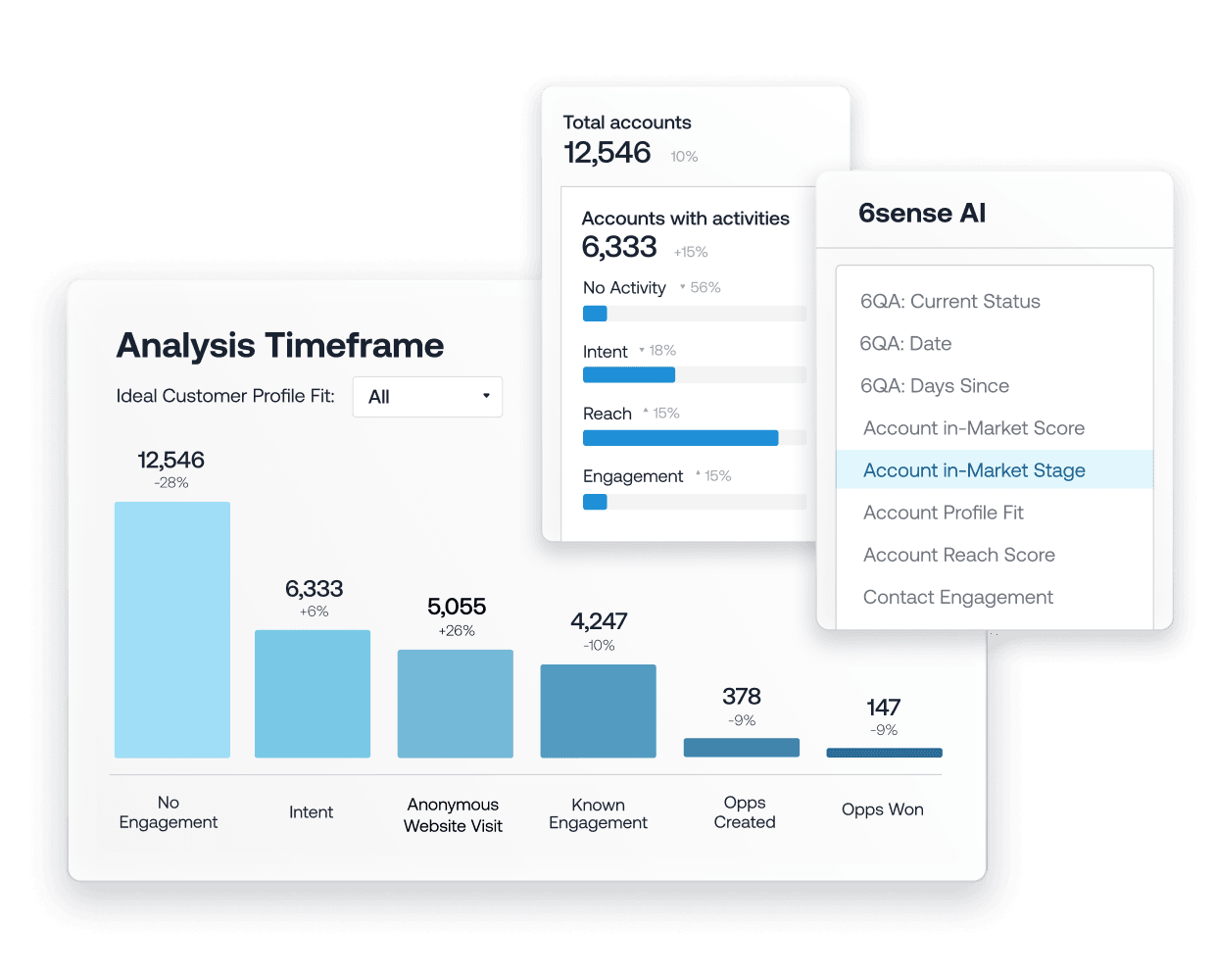
This is what tells you who matters and when.
But on their own, they don’t drive outcomes. Without routing, prioritization, and follow-up, intent signals stay unused.
Default
Default acts as the execution layer for inbound sales ensuring high-intent leads are prioritized, routed, and worked immediately.
It enables teams to:
- Score and prioritize leads dynamically using real-time intent signals—not static MQL rules
- Route inbound leads instantly based on ownership, territory, or account logic
- Trigger follow-ups and workflows tied directly to buyer behavior (e.g., demo requests, pricing visits)
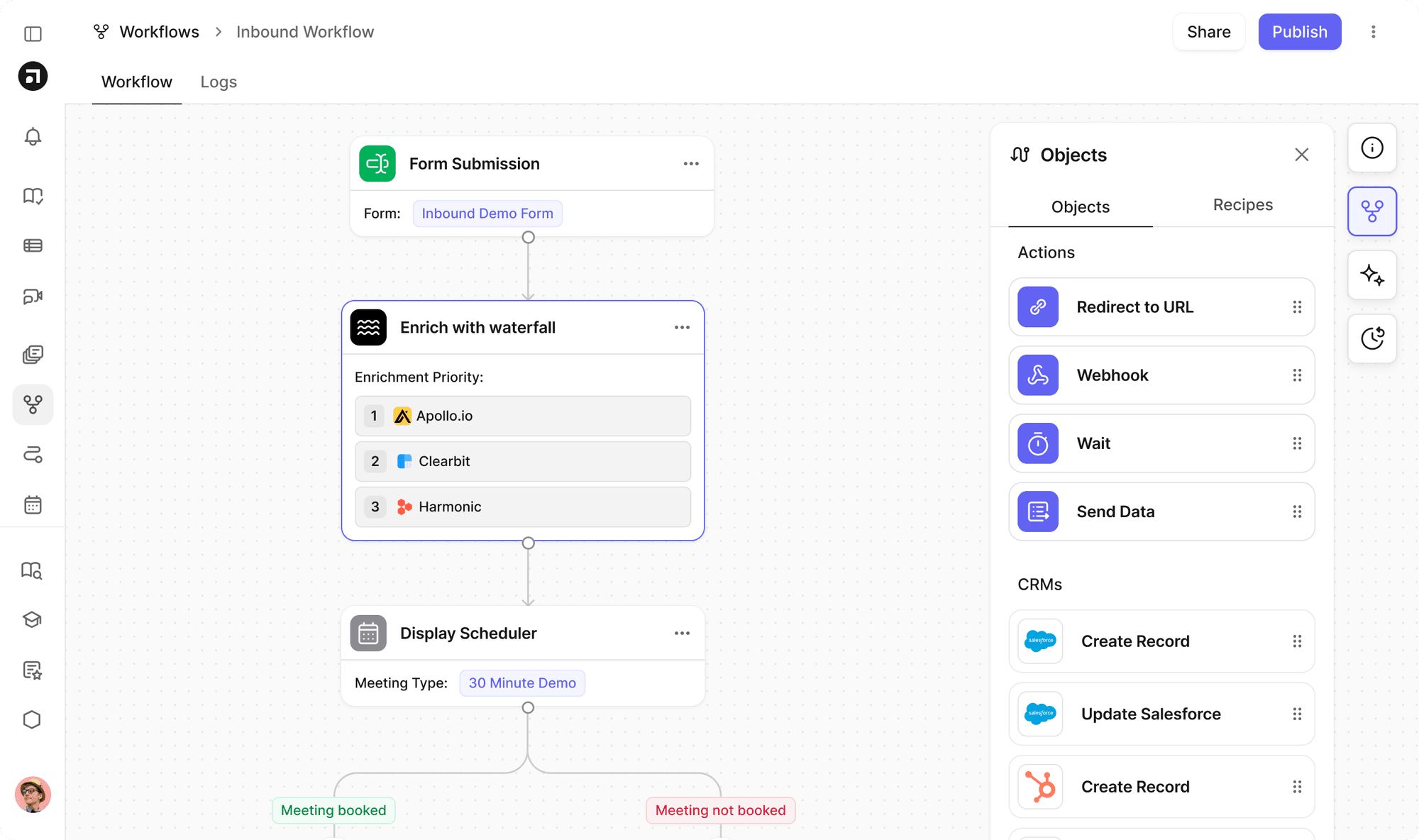
For RevOps, that means speed-to-lead SLAs that enforce themselves, routing that doesn't require manual oversight, and a system where no high-intent lead goes unworked because someone forgot to check a queue.
See how Default’s lead routing software handles prioritization, assignment, and activation for inbound leads in real time.
HubSpot / Salesforce (CRM & lead tracking)
HubSpot and Salesforce act as the system of record for inbound demand, storing data and tracking pipeline progression. They enable teams to:
- Capture and manage lead, account, and activity data
- Track pipeline stages, conversions, and attribution
- Run basic scoring and workflow automation
However, they are not built for real-time execution. Most lack:
- Intent-based prioritization
- Advanced routing across teams and territories
- Enforcement of speed-to-lead SLAs
In practice, most teams need an additional layer to handle prioritization, routing, and follow-up in real time. Something CRMs aren’t designed to manage on their own.
Metrics to measure inbound sales effectiveness
Inbound performance shows up in a few key places: how fast leads are worked, how well they convert, and how clean your pipeline actually is.
Key metrics to track:
- Speed-to-lead: how quickly sales reps respond to inbound inquiries
- Lead-to-opportunity conversion rate: how many leads become qualified pipeline
- Pipeline velocity: how fast deals move through the sales funnel from first touch to close
- Meeting booking rate: how effectively leads convert into conversations
- Revenue per inbound lead: actual revenue generated per lead
- Inbound pipeline contribution: share of pipeline from inbound
If performance is low, these metrics usually point to the same root causes: delays, poor prioritization, or weak lead qualification.
Best practices for implementing inbound sales in B2B GTM teams
Without consistent execution, prioritization varies, routing gets inconsistent, and follow-up depends on the rep instead of the system.
These practices fix that.
Enforce speed-to-lead SLAs
Inbound leads lose value quickly. Even short delays reduce the chance of conversion.
Set clear response targets (e.g., <5 minutes for high-intent actions) and enforce them through automation—not manual tracking. If response time depends on inbox monitoring or rep availability, it will break under volume.
Prioritize using intent
Not every inbound lead should be treated the same.
Move away from static MQL scoring and use real-time signals (pricing page visits, repeat sessions, high-value actions) to decide who gets immediate attention. Then adjust based on what actually converts, not what looks good in a model.
Align on qualification criteria
Misalignment shows up as dropped leads, rework, and inconsistent pipeline quality.
Define shared criteria across marketing, sales, and RevOps: ICP, intent thresholds, and what qualifies as sales-ready. Then make sure handoffs follow the same rules every time.
Automate routing and follow-up
Manual routing introduces delays and edge cases that are hard to manage.
Use automated routing based on ownership, territory, and priority. Pair it with behavior-based triggers so follow-up happens when intent is highest—not hours later or in a generic sequence.
When these pieces are in place, inbound runs the same way every time—regardless of volume, timing, or who’s handling the lead.
Quick checklist for RevOps leaders & sales teams
Use this checklist to ensure your inbound sales process runs efficiently and converts high-intent demand without delays:
Inbound Strategy Checklist
0 / 9If these aren’t consistent, neither is your pipeline.
Start automating your inbound sales workflow today with Default
The difference between a system that handles leads consistently and one that leaves it to timing and manual follow-up shows up in missed SLAs, unworked leads, and deals that never got a real shot.
Default gives you control over your sales workflow layer, so every high-intent lead is prioritized, routed, and worked the moment it comes in.
Book a demo to see how teams are standardizing inbound and closing more of what they already have.
FAQs
1. What is social selling, the inbound way?
Social selling, the inbound way, means engaging buyers using real intent signals like content interaction and activity. Instead of cold outreach, it focuses on timely, personalized engagement aligned with the buyer’s decision stage.
2. How is inbound sales different from lead generation?
Inbound sales converts existing demand, while lead generation creates it. Lead generation brings buyers into your funnel. Inbound sales determines whether that demand turns into qualified pipeline and revenue
3. How fast should teams respond to inbound leads?
Ideally within 5 minutes for high-intent actions like demo requests or pricing page visits. Response delays beyond that significantly reduce meeting rates, conversion, and overall pipeline creation.
4. Can inbound sales work without automation?
No. Manual processes introduce delays, routing errors, and inconsistent follow-up. Without automation, teams fail to meet speed-to-lead expectations and lose high-intent opportunities before engagement even begins.
5. What is the biggest mistake in inbound sales?
Treating all inbound leads equally. Without prioritizing based on intent and urgency, teams waste time on low-value leads while high-intent opportunities go unworked, resulting in lower conversion and lost revenue.