








Enrichment waterfalls
Pull person and company data from several providers in 1 workflow step.
Inbound automationfor scaling teams
Default books demos on your website, with enrichment and routing before the calendar opens.











The workflow starts the moment a visitor submits your demo form.
Each demo request runs through a waterfall of providers, so routing can use company size and job title.
Score every inbound lead against your ideal customer profile (ICP) before a rep sees it.
Each qualified lead goes to the next rep in its territory's queue.
A scheduler with your branding opens the assigned rep's calendar within seconds.
Qualify, enrich, route, and schedule demo requests, your highest-intent source of pipeline.
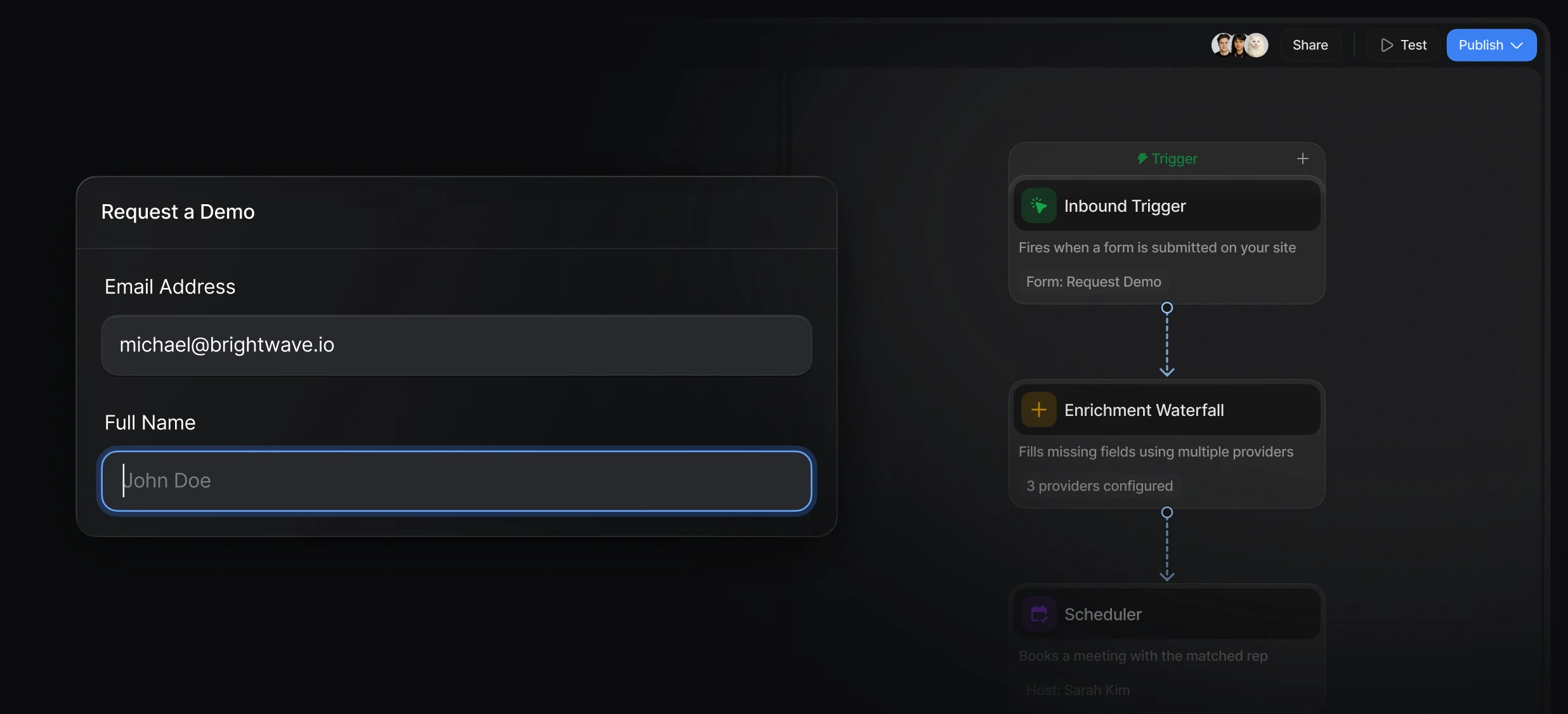
Pull person and company data from several providers in 1 workflow step.
Fine-grained routing rules in 1 ruleset that every workflow can run.
Show rep calendars within seconds of submission.
Default workflows grow with your team, from seed stage to enterprise.
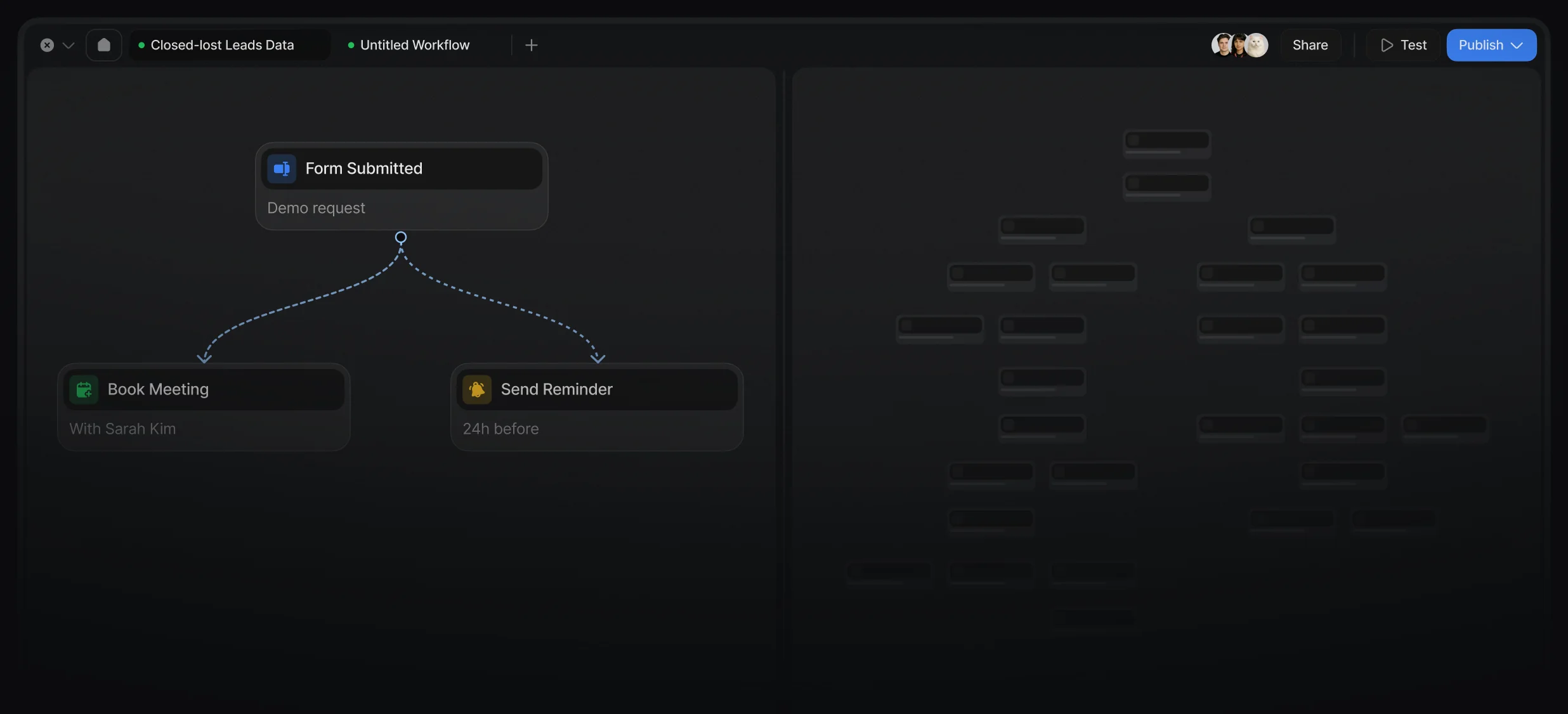
Stand up your core go-to-market workflows with little setup.
Run Default headless from an AI client through the Model Context Protocol (MCP) server.
Modular platform billing for any team shape.
Start a Default workflow from any form submission.
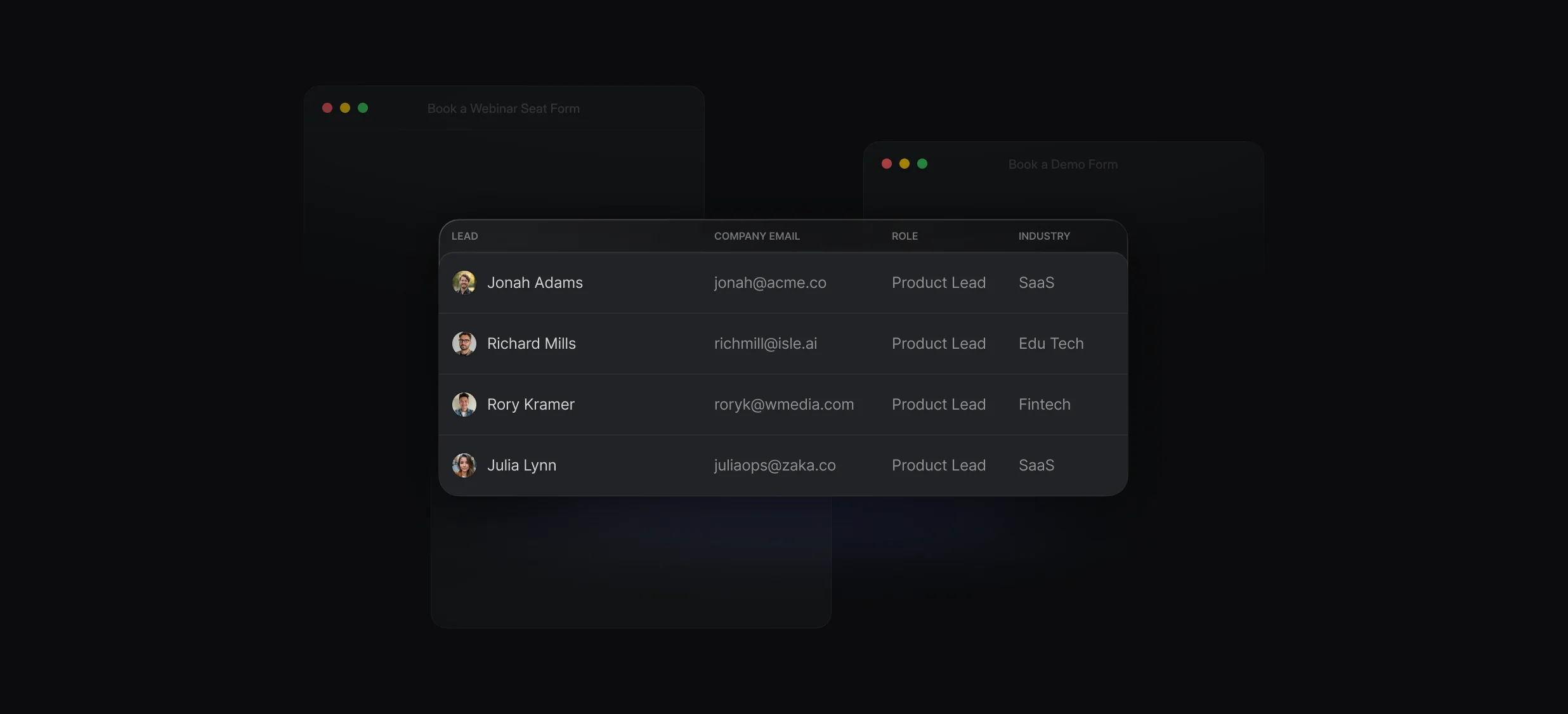
A form submission workflow takes each demo request from enrichment to the rep's calendar.
Qualify webinar leads and add them to your CRM with an automated follow-up.
Enrich leads from content downloads and route them to reps and your CRM.
Rules can route on CRM fields, enrichment data, and website intent signals.
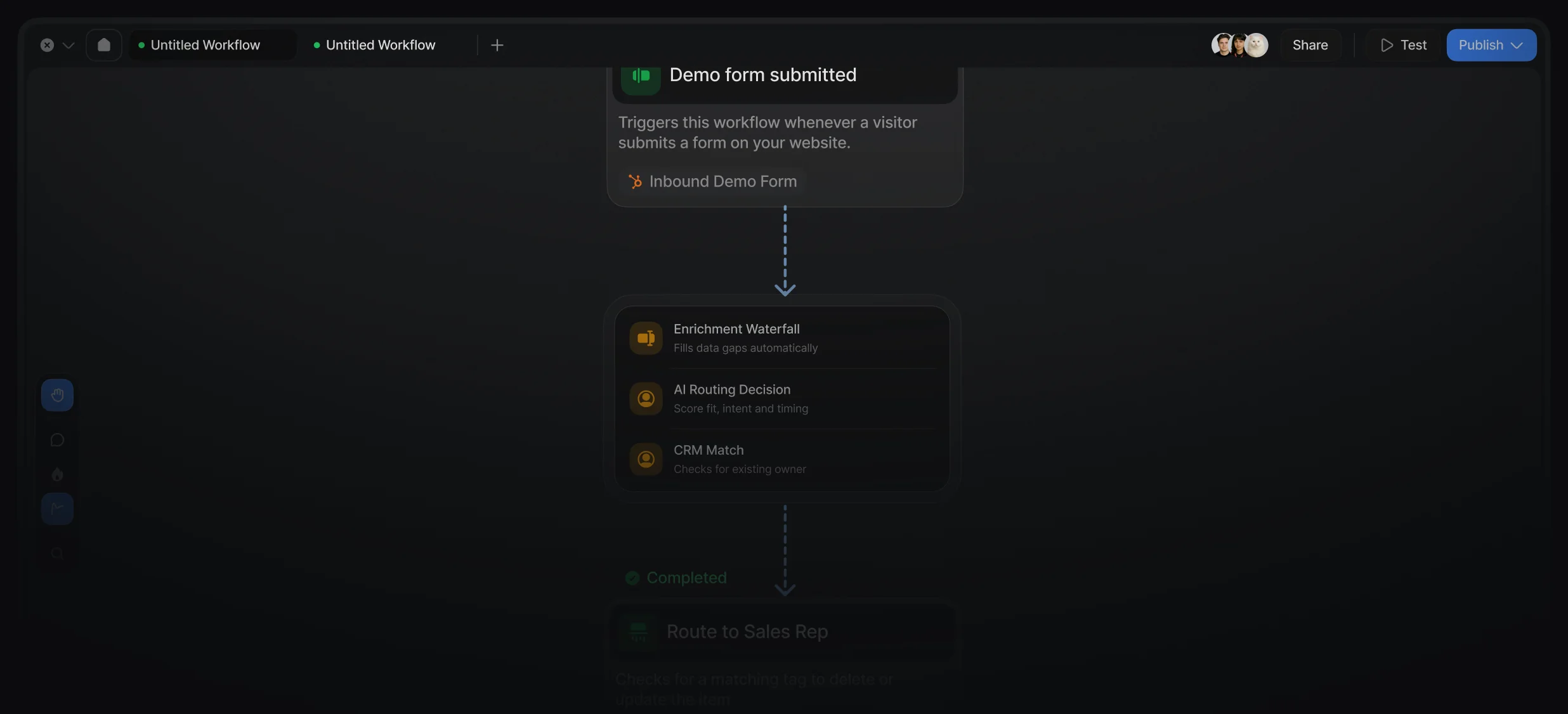
Route on Salesforce or HubSpot fields, such as country or the account owner.
Route on company size or job title from enrichment, even when the form doesn't ask.
Start a workflow when Default identifies a visitor, on any page or only the ones you pick.
Send automated follow-ups from the rep assigned to each lead.
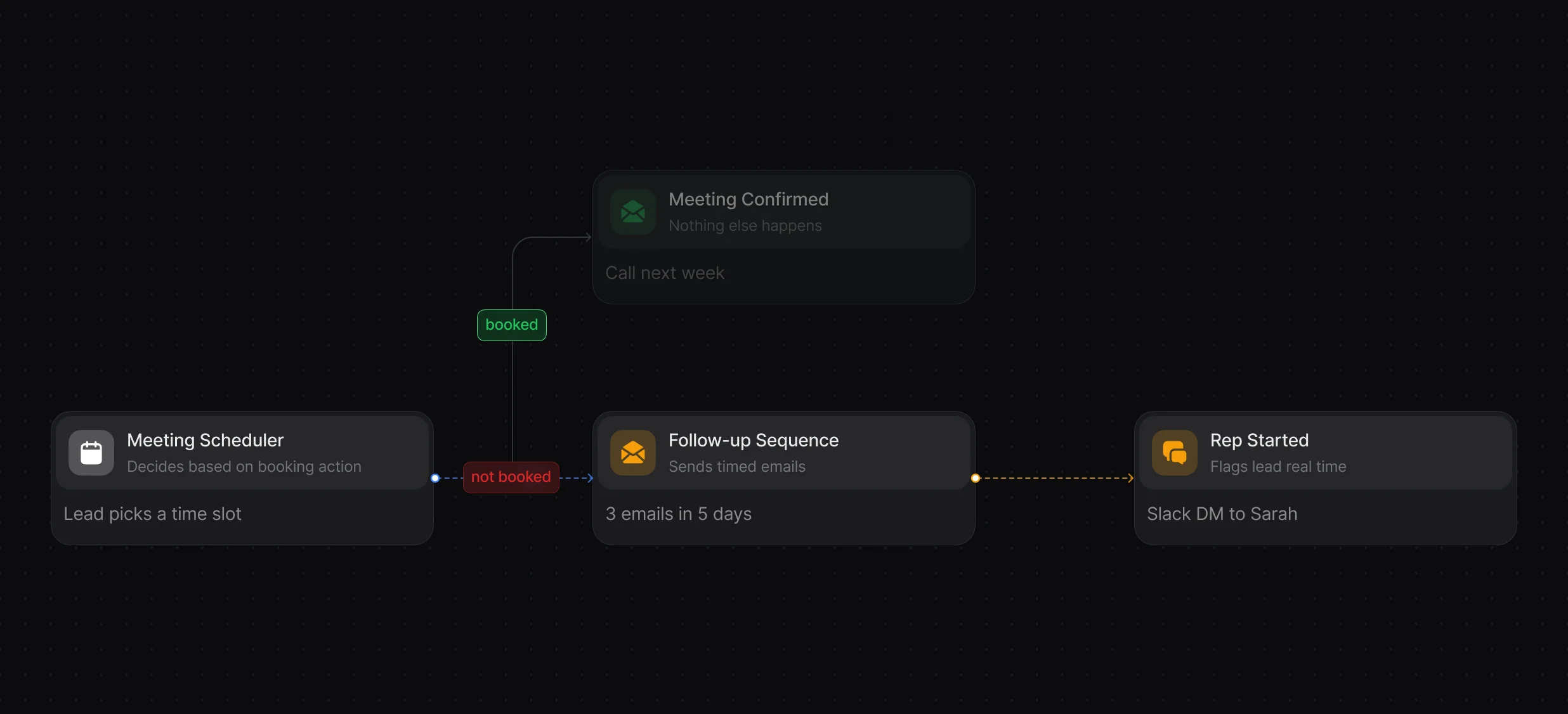
Start a follow-up sequence based on whether the lead booked a meeting.
Assign each lead that doesn't book a meeting to a rep, and alert the rep right away.
“It’s the control layer we’re using to run GTM from the same brain.”

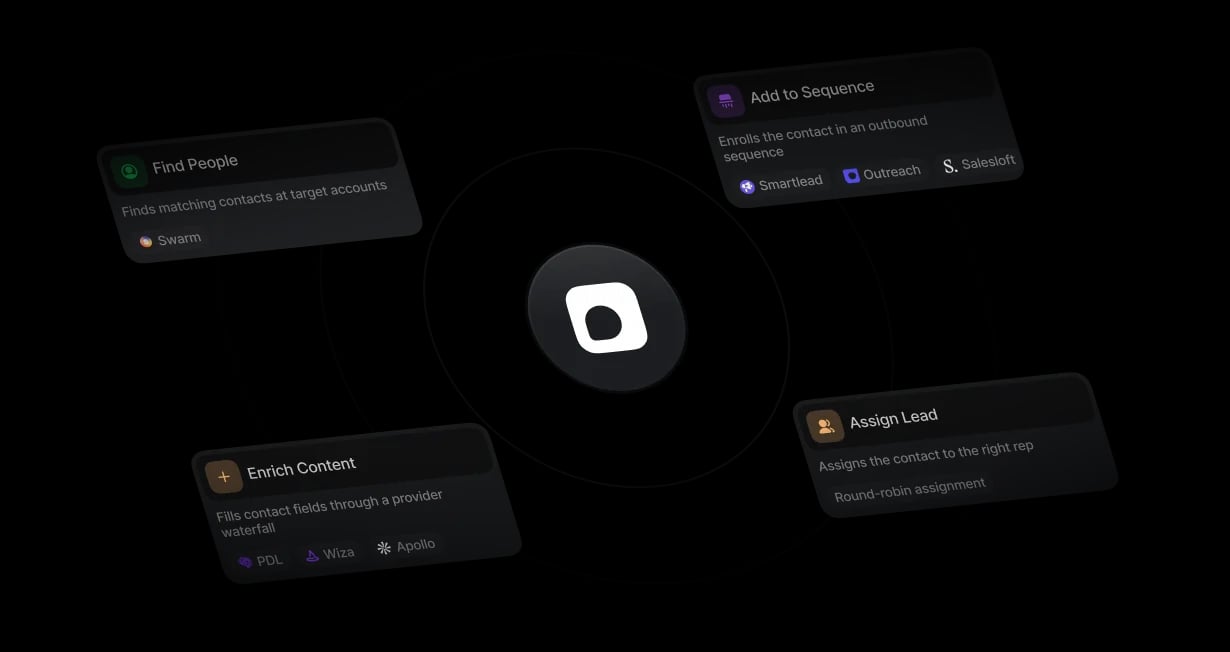
Prospect, enrich, and sequence on first-party signals.
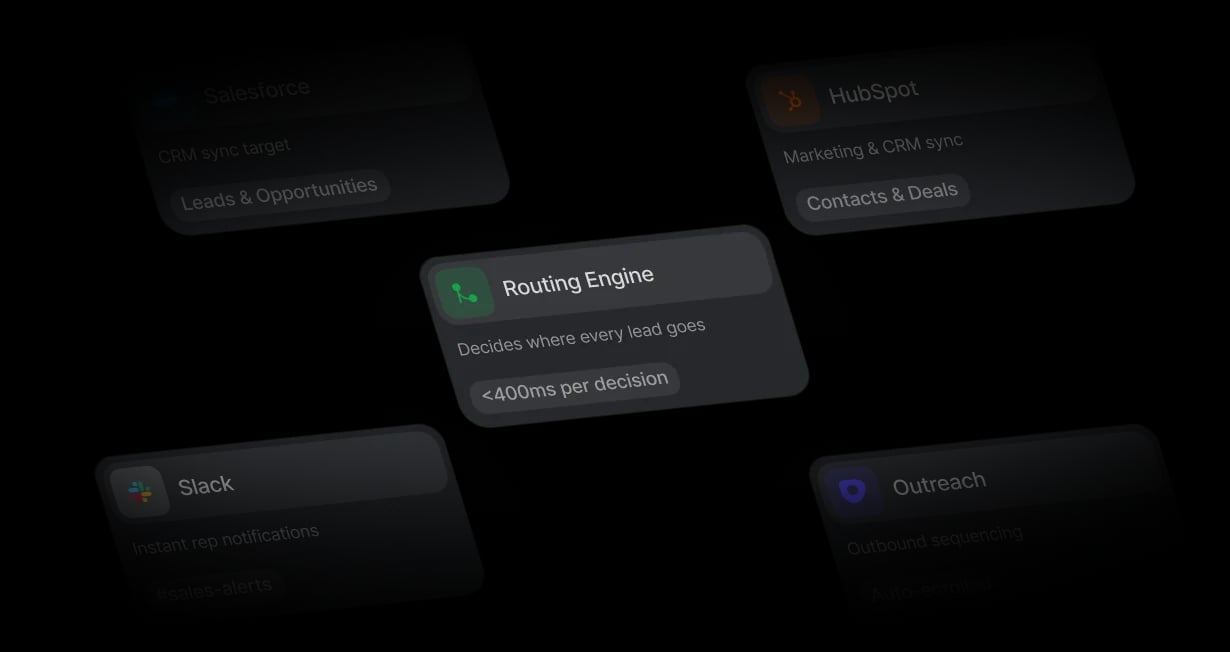
Route leads across territories and segments, with logs.
One platform to manage workflows, enrich records, route leads, and schedule meetings.


