








Strategic Challenge
By the time Matt McGonegle, Director of GTM Operations took over, the revenue engine was being held together by 147 tools and years of inherited ops debt. Critical workflows were scattered across Chili Piper (scheduling), LeanData (routing and hygiene), Rattle (Slack alerts), Salesforce Flows, Marketo, Clay, and Apollo. None of these surfaces spoke the same language, and small changes in one system often broke another.
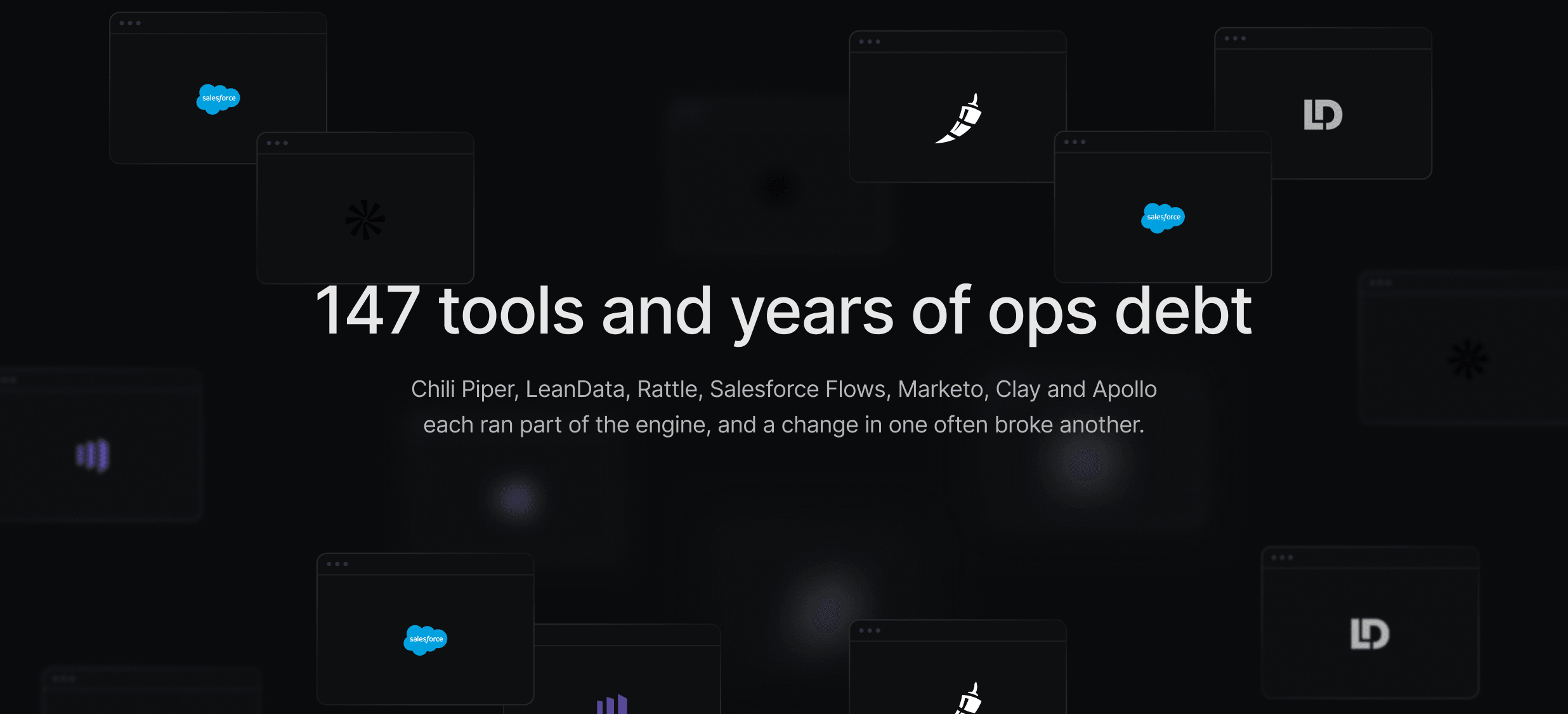
On the front lines, BDRs and AEs felt the fragmentation every day. Because Chili Piper logic hadn’t kept up with Cortex’s handoff model, BDRs often had to “schedule a meeting, cancel that meeting, build a new meeting” just to get time onto the right AE’s calendar. Routing rules were scattered across Chili Piper and LeanData, so no one could say with confidence that important accounts were getting to the right owner.
That fragmentation also showed up in the numbers. At the start of a quarter, pipeline looked healthy on paper. By month three, it would collapse to 40% of the original value with no reliable explanation. Auto-created opportunities with generic values, inconsistent ownership, and mismatched fields between Salesforce and Gong made it impossible to trust what was in the CRM. “I tried Workato. I tried Celigo. I tried all these random iPaaS’s. They’re so rigid, I wasted tons of hours messing around with them,” the RevOps leader said. Changing anything felt risky. Reporting was inconsistent. Firefighting tickets and spreadsheet clean-up took priority over strategic work.
“We had around 147 GTM tools and almost no one could explain what half of them did. There was no single place to see how revenue actually flowed.”
 Matt McgonegleDirector of GTM Operations, Cortex
The Default Layer
Cortex first looked at Default as a potential replacement for Chili Piper during a renewal cycle. Very quickly, the team realized that Default could absorb three of their most painful surfaces at once—Chili Piper for inbound booking, LeanData for routing and SLA enforcement, and Rattle for Slack alerts.
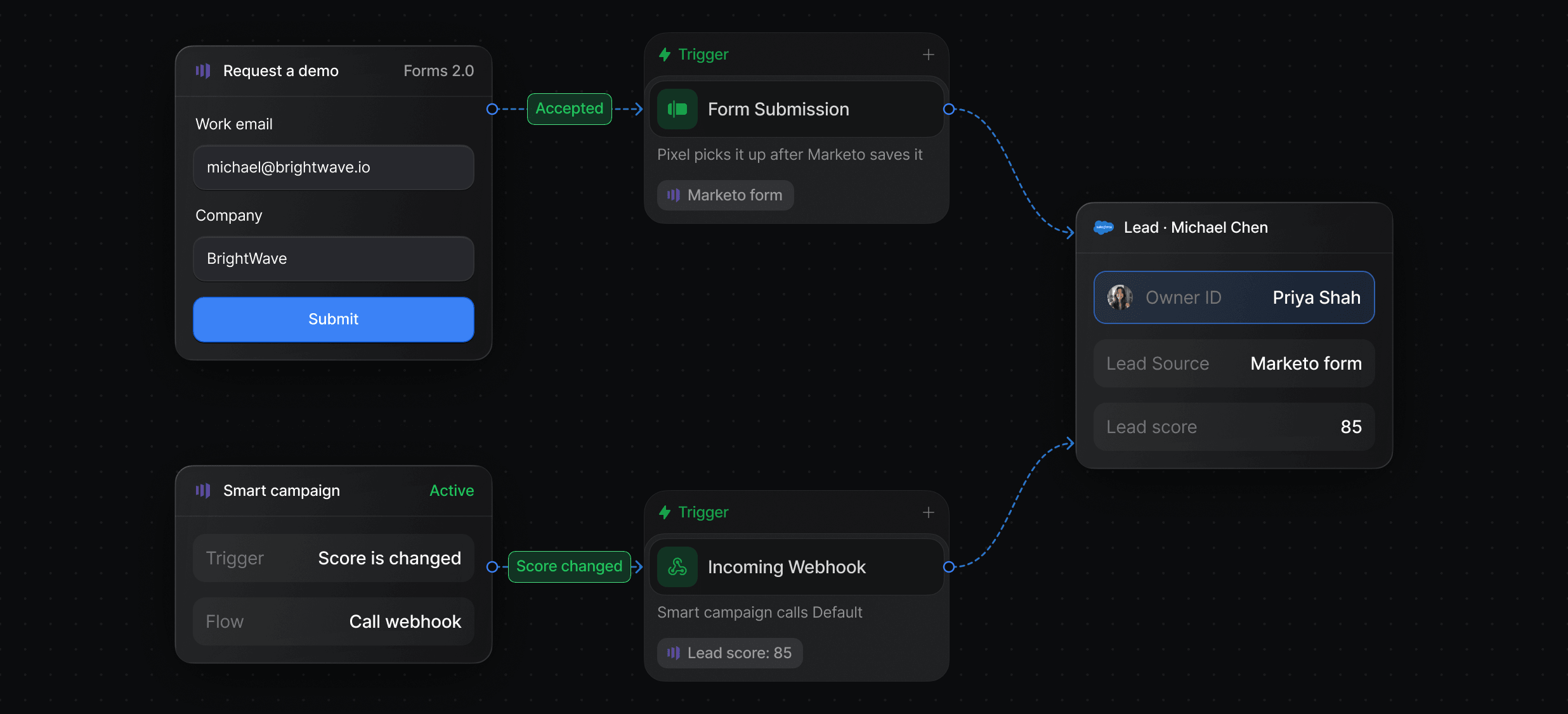
Default now sits as the orchestration layer between Cortex’s existing systems—Salesforce, Marketo, Clay, Gong, Slack—and the events that matter: form fills, opportunity updates, churn risk flags, and finance thresholds. Form submissions from Marketo land in Default, where they’re enriched, qualified, and routed using a single set of rules that account for ownership, open opportunities, region, time zone, buying center, and recent activity. The same logic decides whose calendar to show, whether to expose a BDR or AE, and when to trigger follow-up sequences if a qualified visitor views the calendar but doesn’t book.
Instead of duplicating if/else branches across Chili Piper, LeanData, and Rattle, Cortex now encodes routing, enrichment, and alerting once in Default and lets every workflow inherit that logic. Territories, segments, and queues live in one place. More than 80 routing conditions cover scenarios like open-opp ownership, recent contact by a BDR, regional coverage, and closed-lost recency, so meetings land with a sensible human while still respecting prospect time preferences.
Crucially, the team can see and debug what the system is doing. Workflow logs and the canvas view show the exact path a record took, including where it branched, what enrichment data came back, and why a particular rep or queue was selected. If something fails, Default surfaces a clear error, suggested fix, and alerts the RevOps.
The same orchestration pattern now powers revenue-recognition and finance workflows. High-TCV deals, churn risk events, and closed opportunities trigger Default workflows that push alerts into a private Slack channel shared by the RevOps leader, the controller, and the CFO. That channel has become the starting point for revenue recognition, replacing a patchwork of Rattle rules and spreadsheets.
“I knew of Default as a Chili Piper killer then we found out it was a lot more than that.”
Matt McGonegleDirector of GTM Operations, CortexGTM Advantage
With Default as the control layer, Cortex’s wins show up across the stack: in how leads are handled, how RevOps works, and how revenue is tracked and acted on.

Operational Wins
- Routing and scheduling now run through one workflow canvas instead of three tools, eliminating the BDR workaround of “schedule, cancel, recreate” meetings just to get onto the right AE calendar and making handoffs predictable for every form fill.
- More than 80 routing rules are defined once and reused everywhere, so Cortex can adjust queues, territories, and handoff logic in a single place and see those changes reflected immediately in calendars, Slack alerts, and CRM updates.
- Instead of juggling Rattle, LeanData, Salesforce Flows, and multiple iPaaS tools, the RevOps leader now treats Default as the default surface for experimentation, describing it as materially faster and less painful than previous options and freeing up hours that previously went into brittle flow builders.
Strategic Wins
- Default is already powering real-time alerts and data shaping, and Cortex sees it as the foundation for an AI-driven GTM motion where Default not only routes and alerts, but also flags risk patterns and proactively coaches reps instead of relying on manual Gong deep-dives.
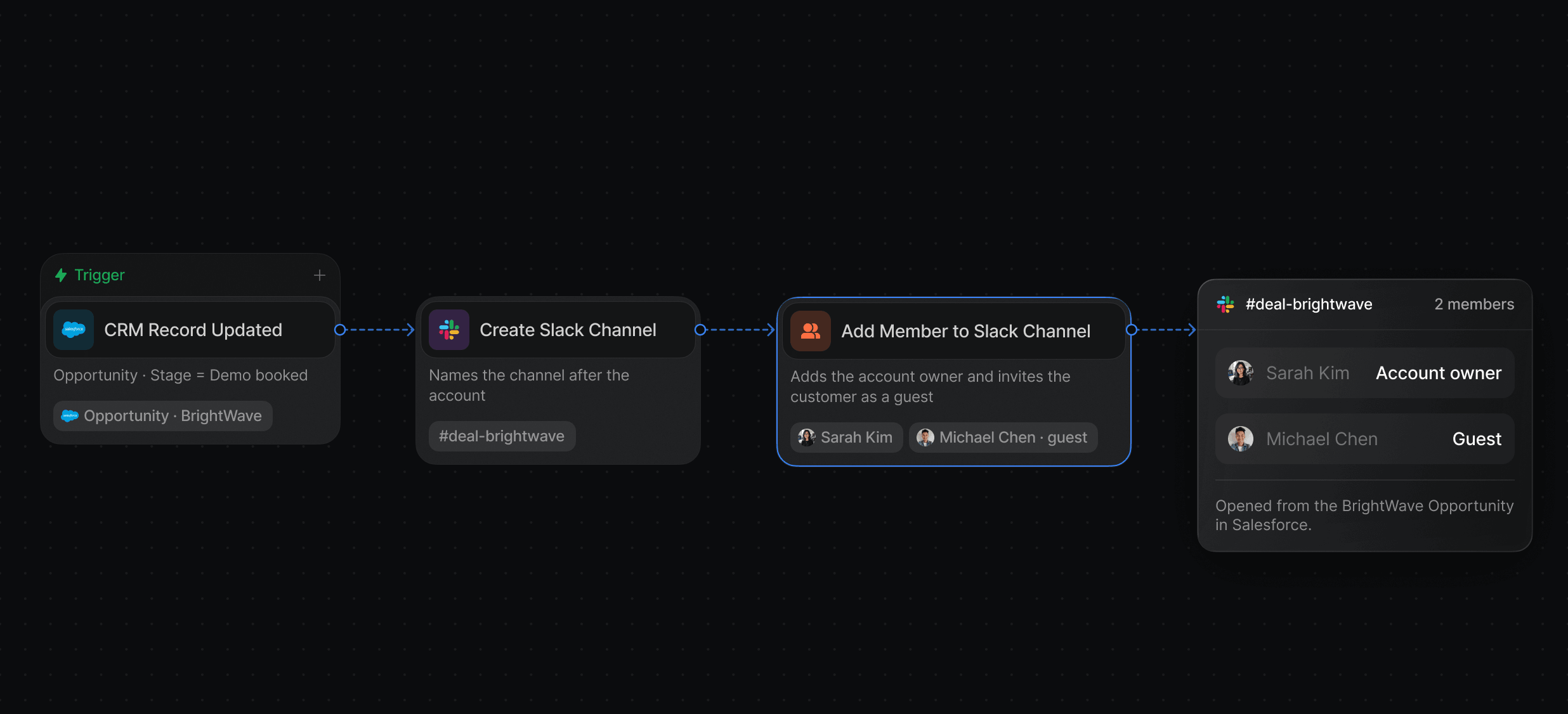
- Finance and GTM leaders get real-time Slack alerts when high-TCV deals move, churn risks emerge, or key stage changes happen, closing the gap between CRM events and revenue recognition decisions without adding another point tool.
“It’s the control layer we’re using to run GTM from the same brain.”
Matt McGonegleDirector of GTM Operations, CortexLooking Ahead
Cortex is now standardizing more of its GTM and finance automation on Default, with a clear plan to fully retire Rattle and progressively migrate more and more LeanData as renewals come up. The team’s next wave of work focuses on using Default as a general-purpose orchestrator between Salesforce, Slack, Clay, and Gong. Longer term, Cortex wants Default to graduate from real-time alerts to proactive coaching: a nervous system for the go-to-market engine where any event that “turns into a dollar” flows through one connected control layer.
Run revenue as an engineered system
Revamp inbound with easier routing, actionable intent, and faster scheduling.