








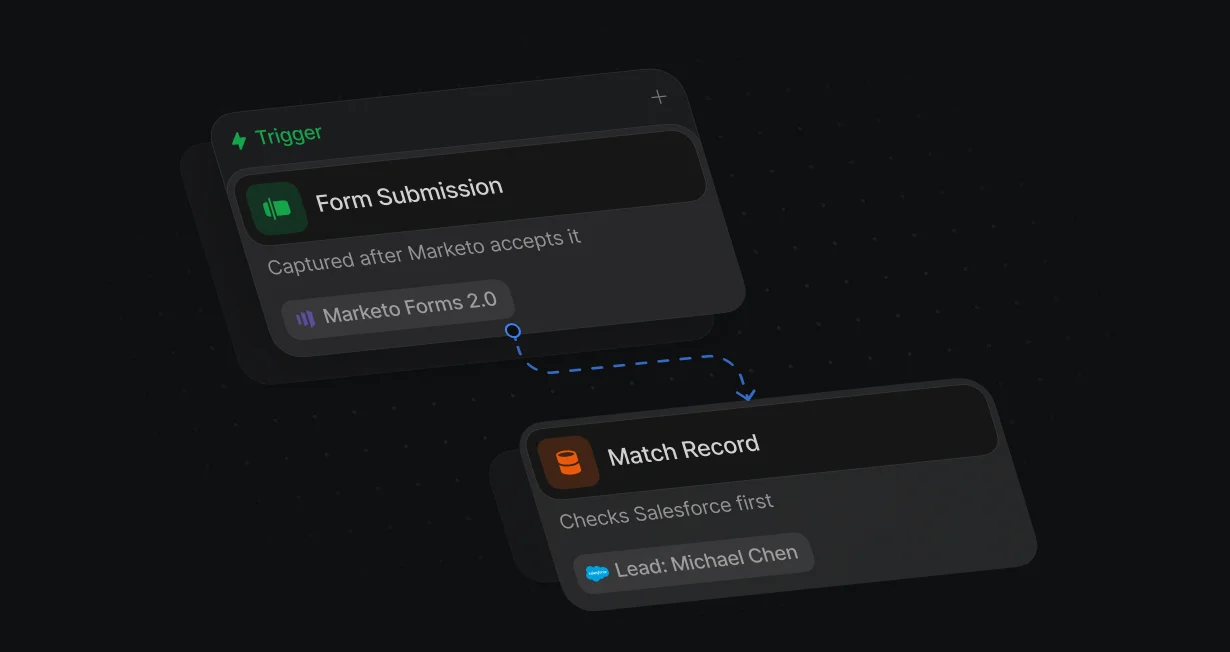
Marketo forms, unchanged
The Pixel reads the Marketo form on your page, and Marketo keeps receiving every submission.
Route Marketo leadsto the right Salesforce rep
Default routes Marketo form fills to the right Salesforce rep and books the meeting.












The Pixel reads the Marketo form on your page, and Marketo keeps receiving every submission.
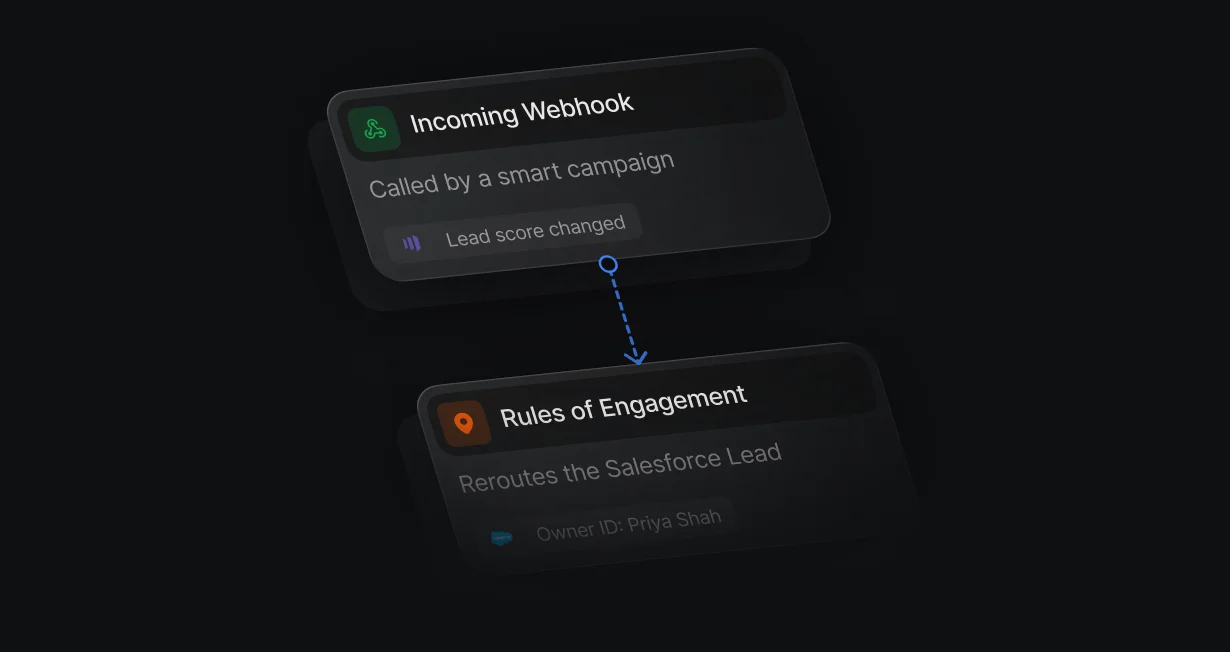
A smart campaign can call Default's webhook to route a lead when its score changes.
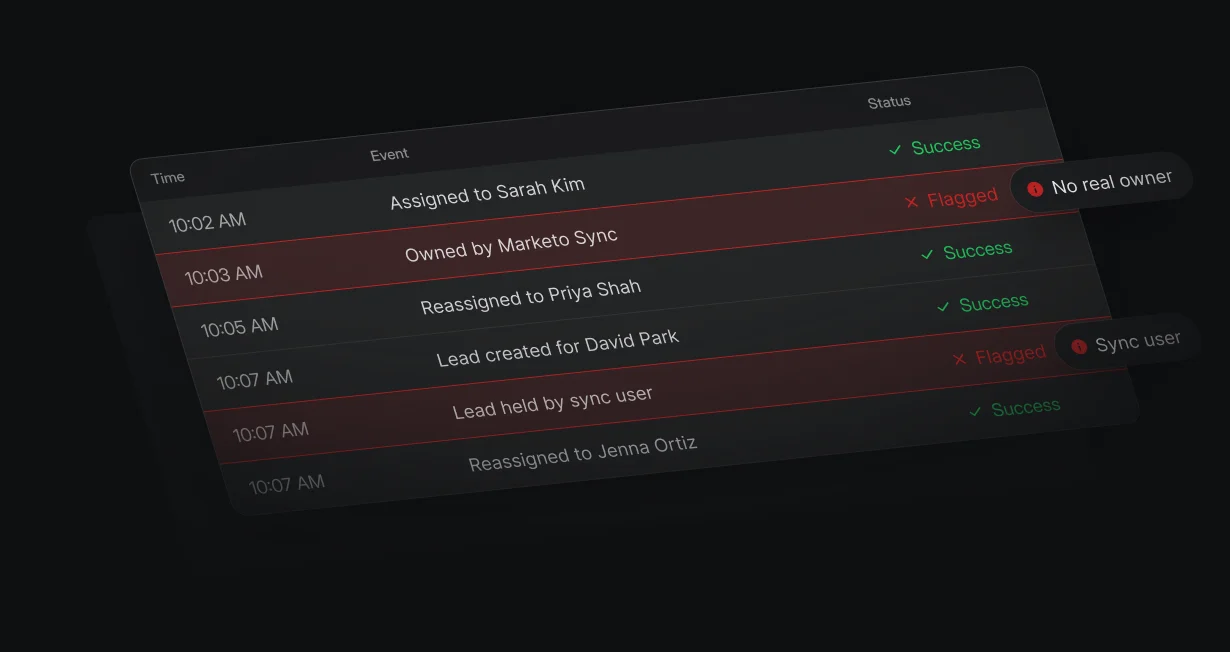
Leads still held by a placeholder owner, such as the Marketo sync user, get a rep from round robin.
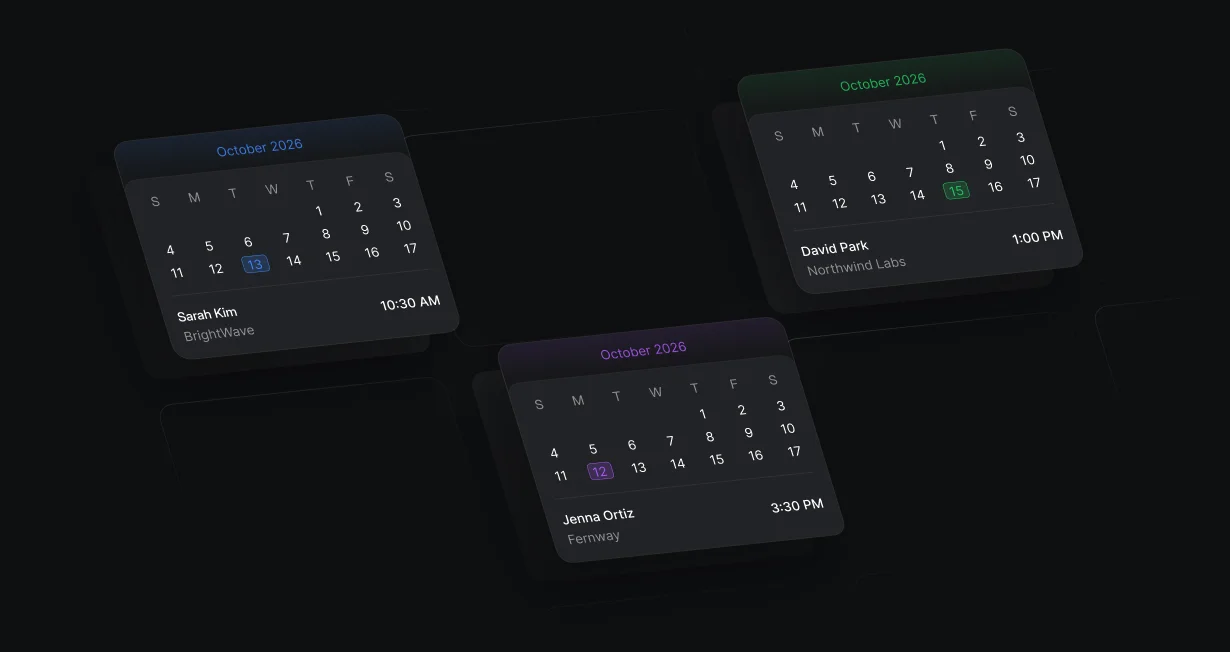
The assigned rep's calendar opens on your page after the visitor submits.
The Pixel captures Forms 2.0 submissions after Marketo accepts them. A smart campaign can also call Default's webhook, for example when a score changes.
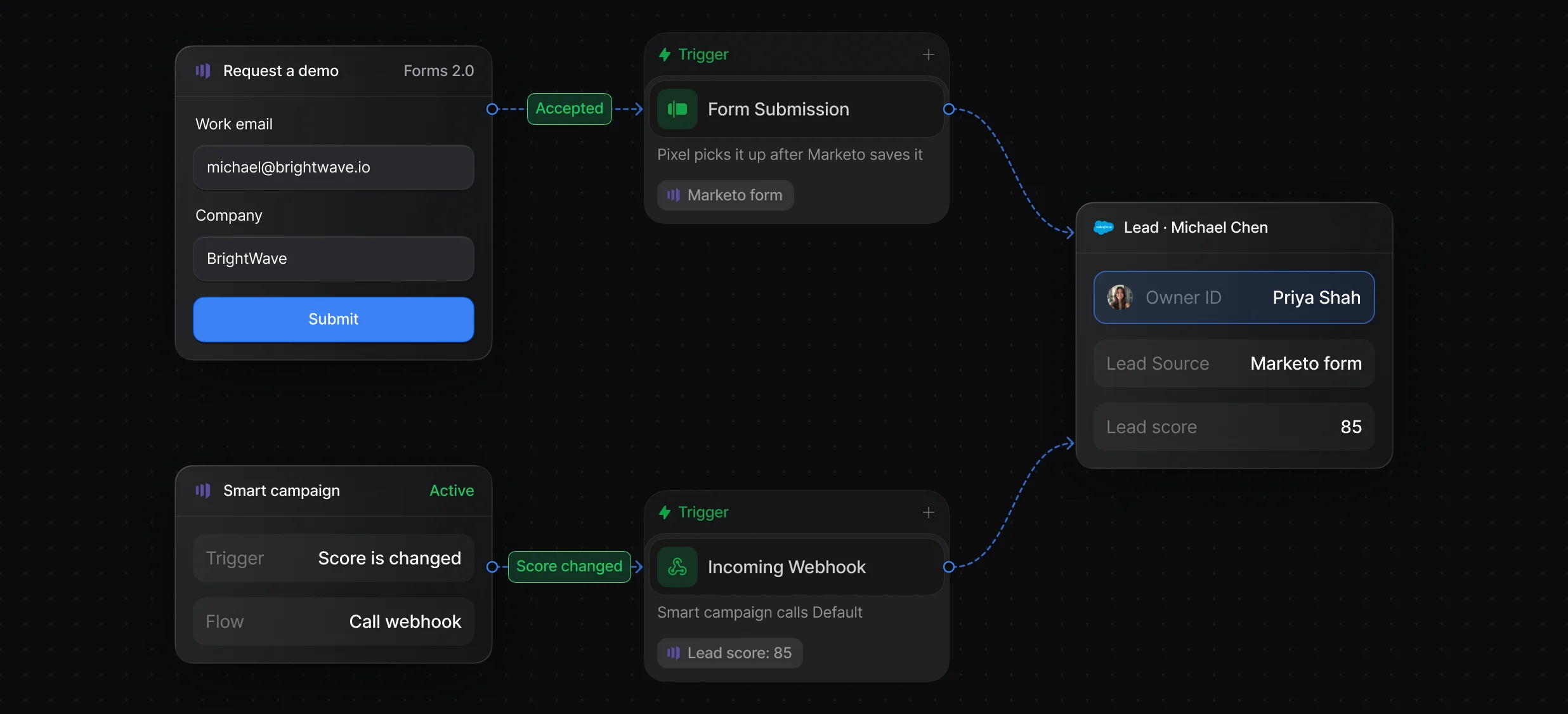
Forms 2.0 capture, the skipped follow-up page, and field mapping.
Pixel capture, smart campaign webhooks, and writing results back through your CRM.
Start a workflow from a Marketo webhook, and send each event through 1 path so it routes once.
Match Record checks Salesforce first. When there's no match, a rule or round robin picks the rep and Create Record writes the lead, and matched leads still owned by the sync user get reassigned.
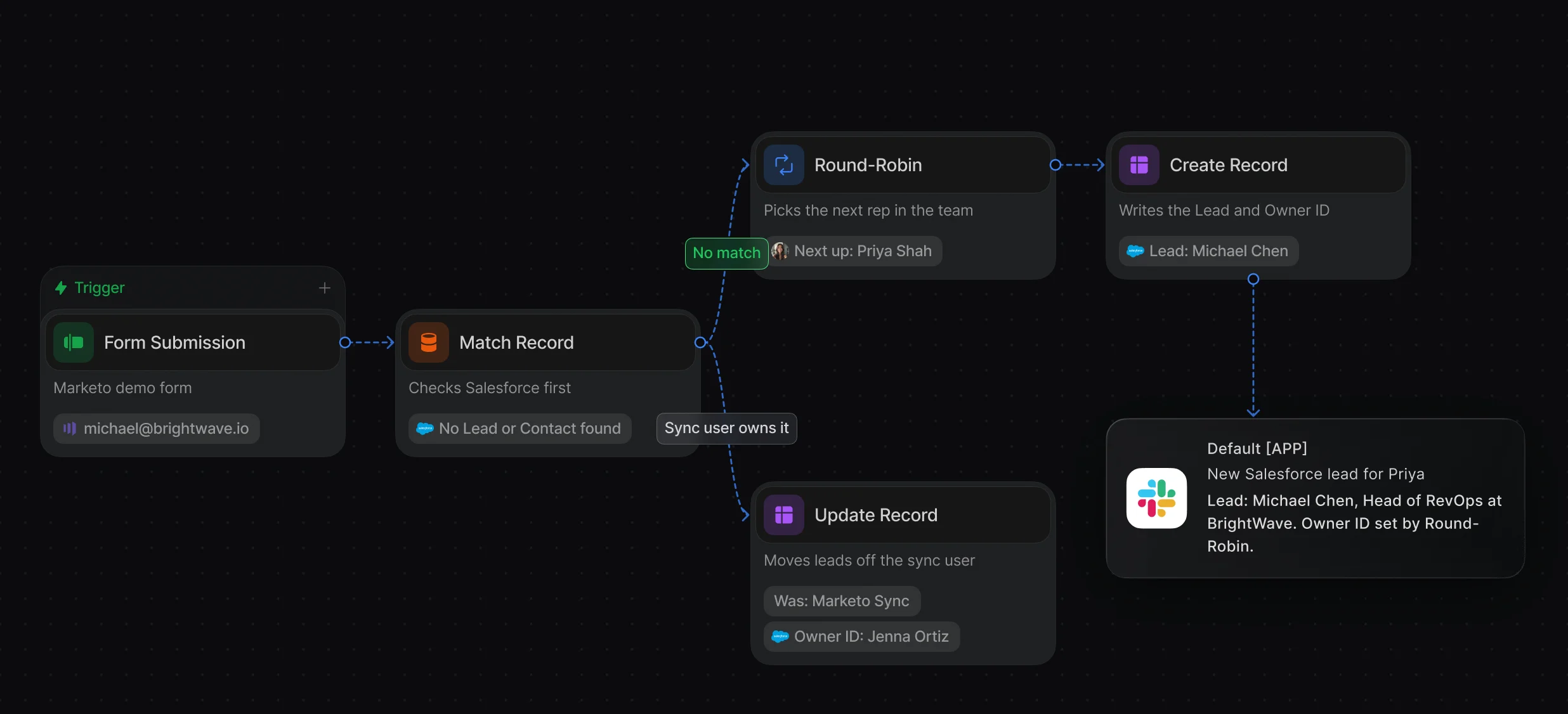
Pick the owner by territory or company size from 1 shared ruleset.
Take turns across a team, with weights and out-of-office skips.
Tell the new owner in Slack, with the lead's score and company.
The assigned rep's calendar opens on your page after submit, and redirects for booked and not booked take the place of Marketo's follow-up page.
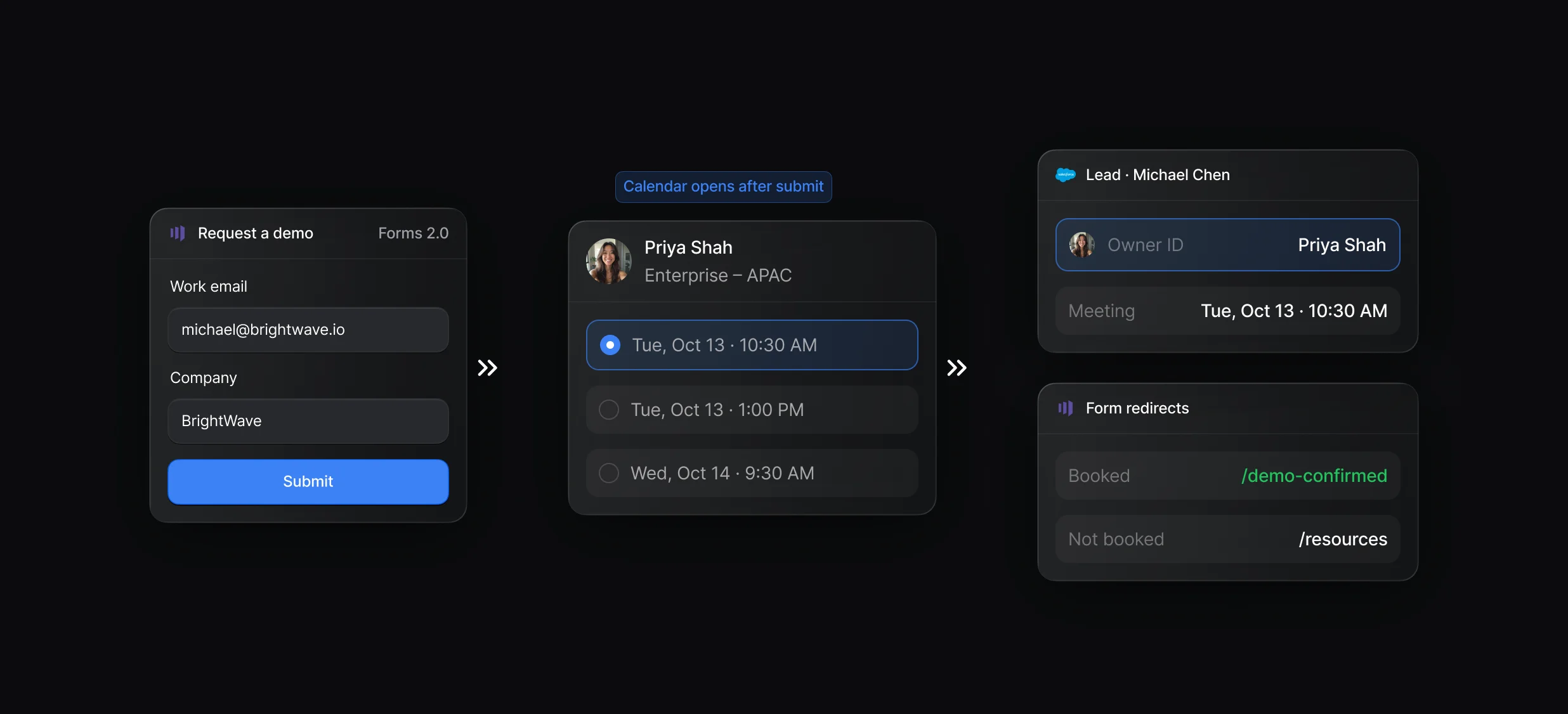
The calendar opens over your page, with no second form to fill in.
Visitors who close the calendar go down the Not booked branch for follow-up.
“It’s the control layer we’re using to run GTM from the same brain.”

Default writes the owner and other fields to Salesforce with Update Record or Create Record, and Marketo picks them up through its Salesforce sync when it syncs those fields. That sync is Marketo's native connector: leads, contacts, and Salesforce campaigns sync both ways, and each cycle pauses 5 minutes before the next.
Yes, a Marketo smart campaign with the Score is Changed trigger calls Default's webhook through a Call Webhook flow step, and the Default workflow matches the lead in Salesforce and assigns an owner with Round-Robin. Marketo's score marks when a lead is ready, and Default picks the rep.
No, Default connects to Marketo through the Pixel on your Marketo forms, the Incoming Webhook trigger for Marketo webhooks, and your Salesforce sync, since Marketo isn't a native integration and Default doesn't sign in to it. To write to Marketo, a Send to Webhook node can call a service you run that uses the Marketo REST API.
Default's Pixel captures each Marketo form submission while the visitor is still on the page, so the Form Submission workflow can route the lead and open a calendar right after submit. Send each event through 1 path, the Pixel or a webhook, or the lead routes twice.
Yes, when the form's Default workflow has a Display Scheduler node, the Pixel tells Marketo to skip its follow-up page and opens the routed rep's calendar on your page, while Marketo still receives the submission. The form has to be embedded in your page, since the Pixel can't read a cross-origin iframe.
Routing, enrichment, and scheduling for every inbound lead.
Turn website form fills into routed Salesforce leads.
Take turns across a team with weights and paused reps.
Route every Salesforce lead and book the meeting.
Keep every routing rule in 1 ruleset.
Route leads across both CRMs from 1 workflow.
One platform to manage workflows, enrich records, route leads, and schedule meetings.

